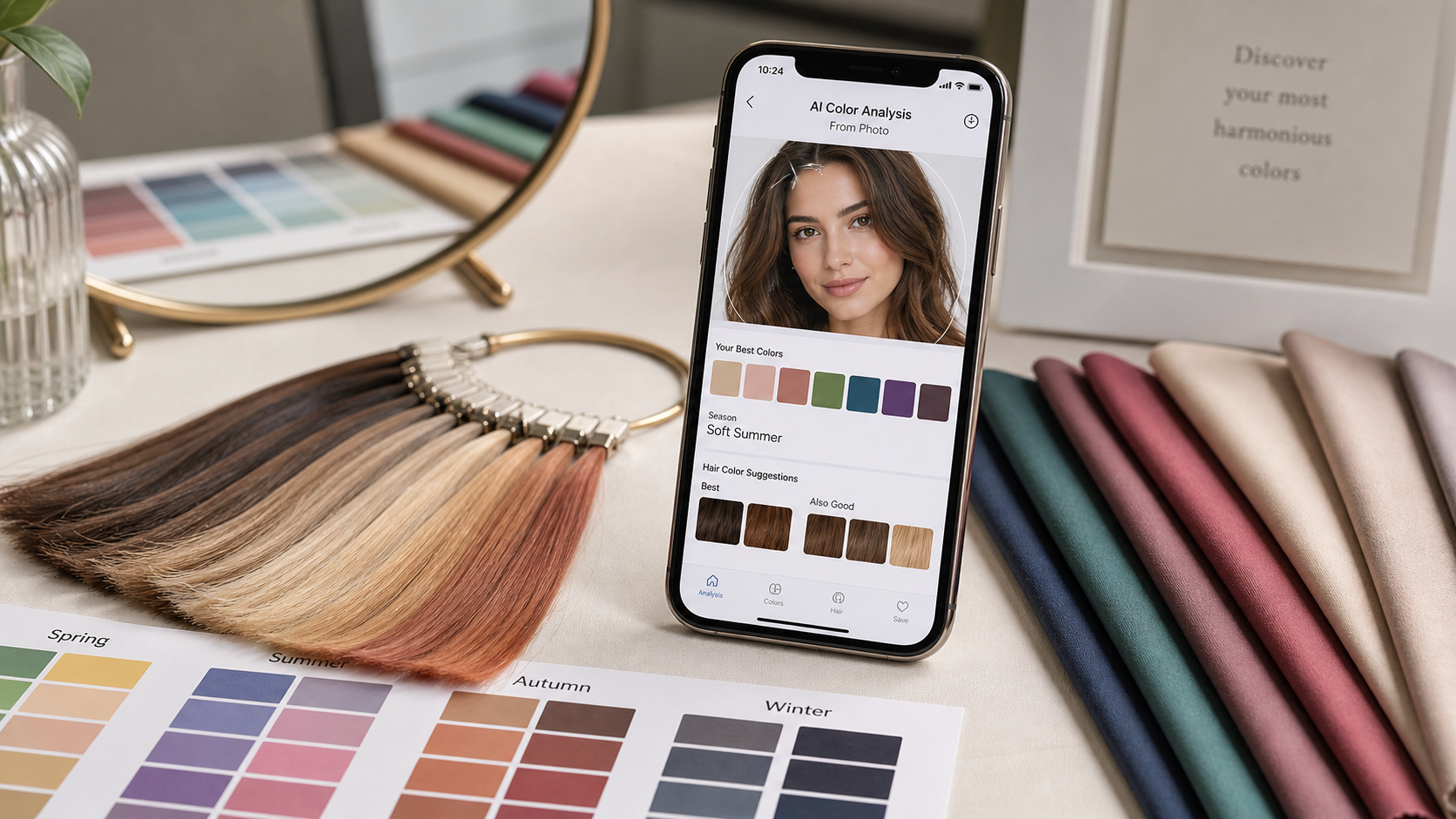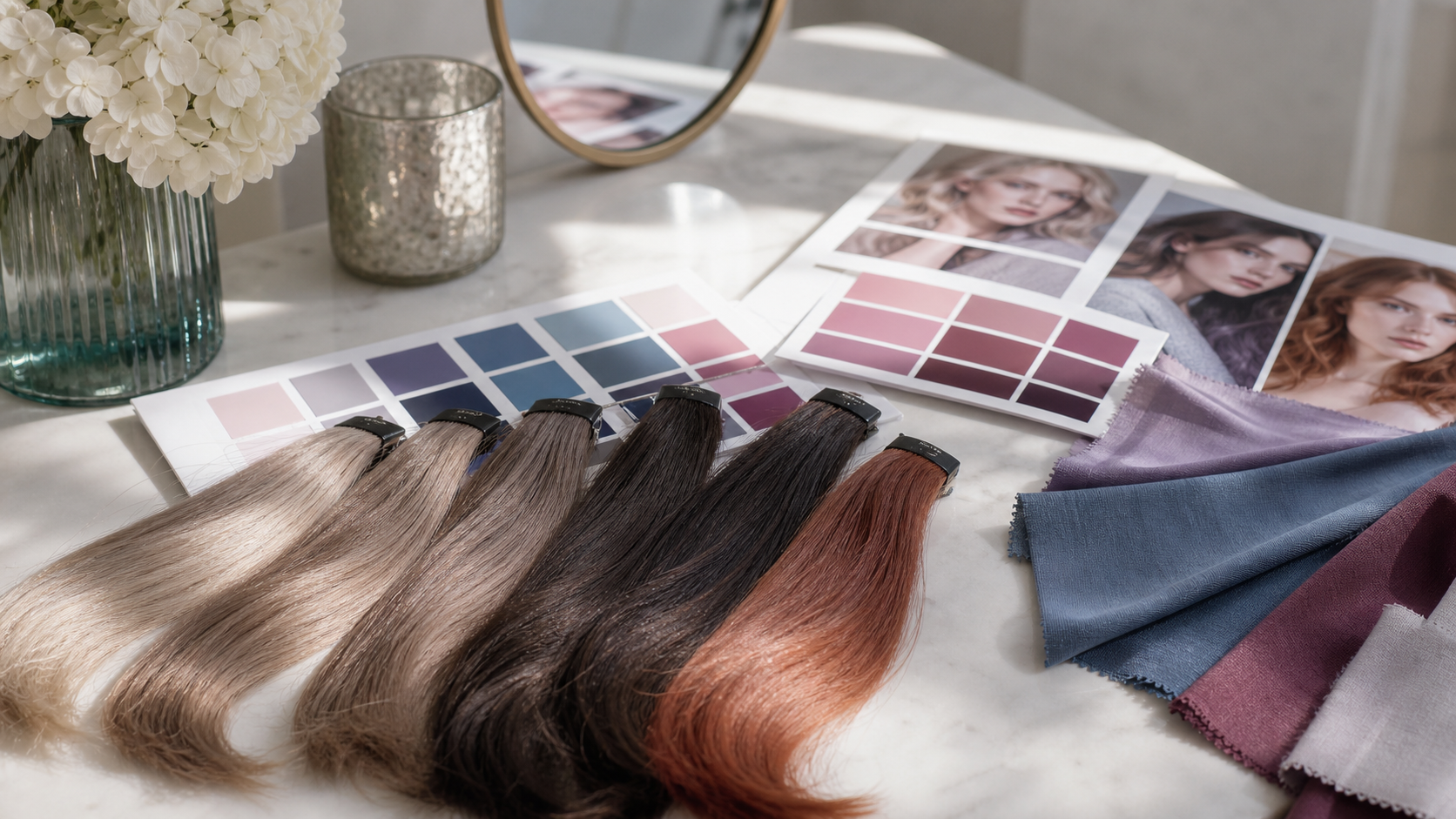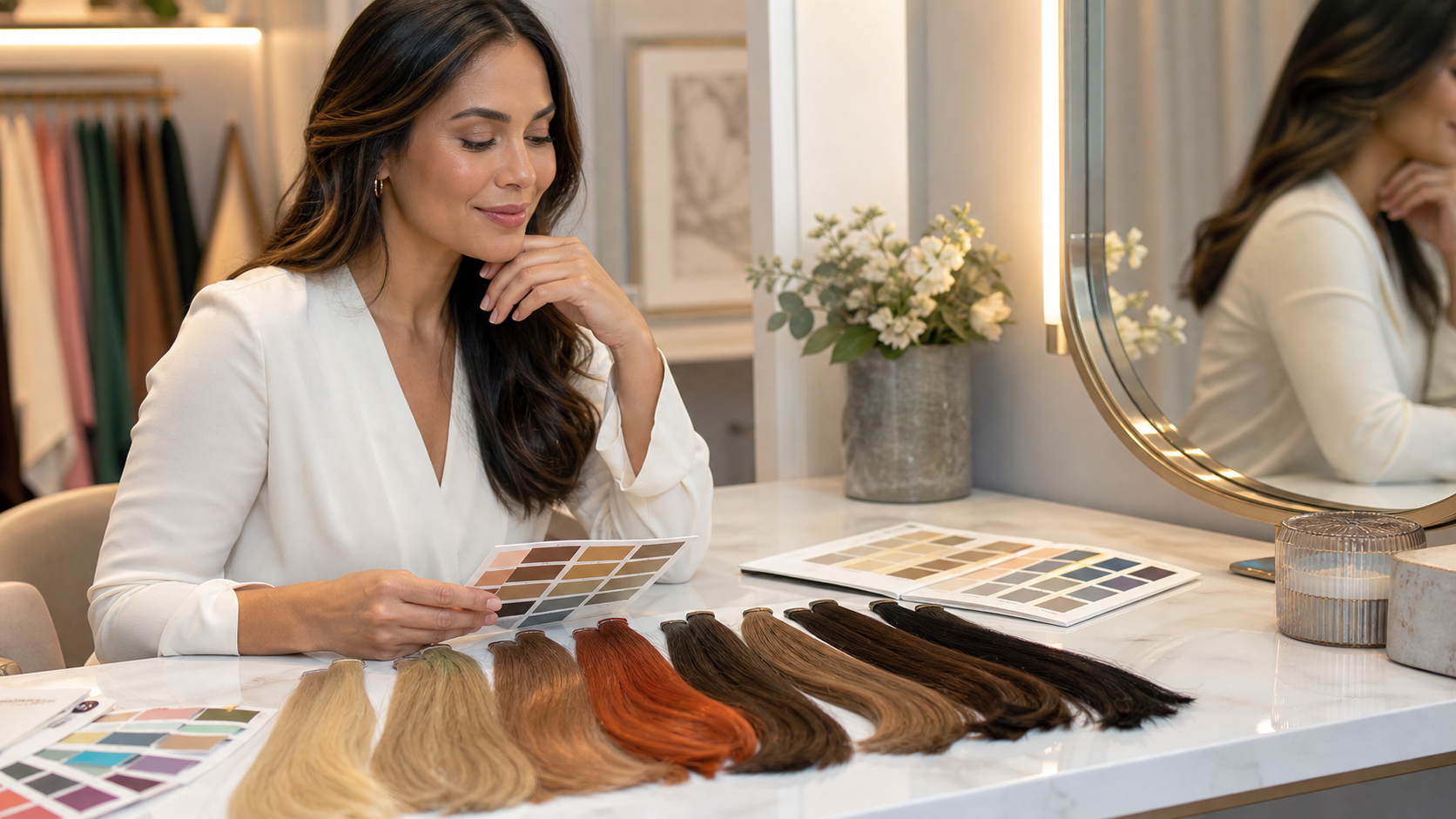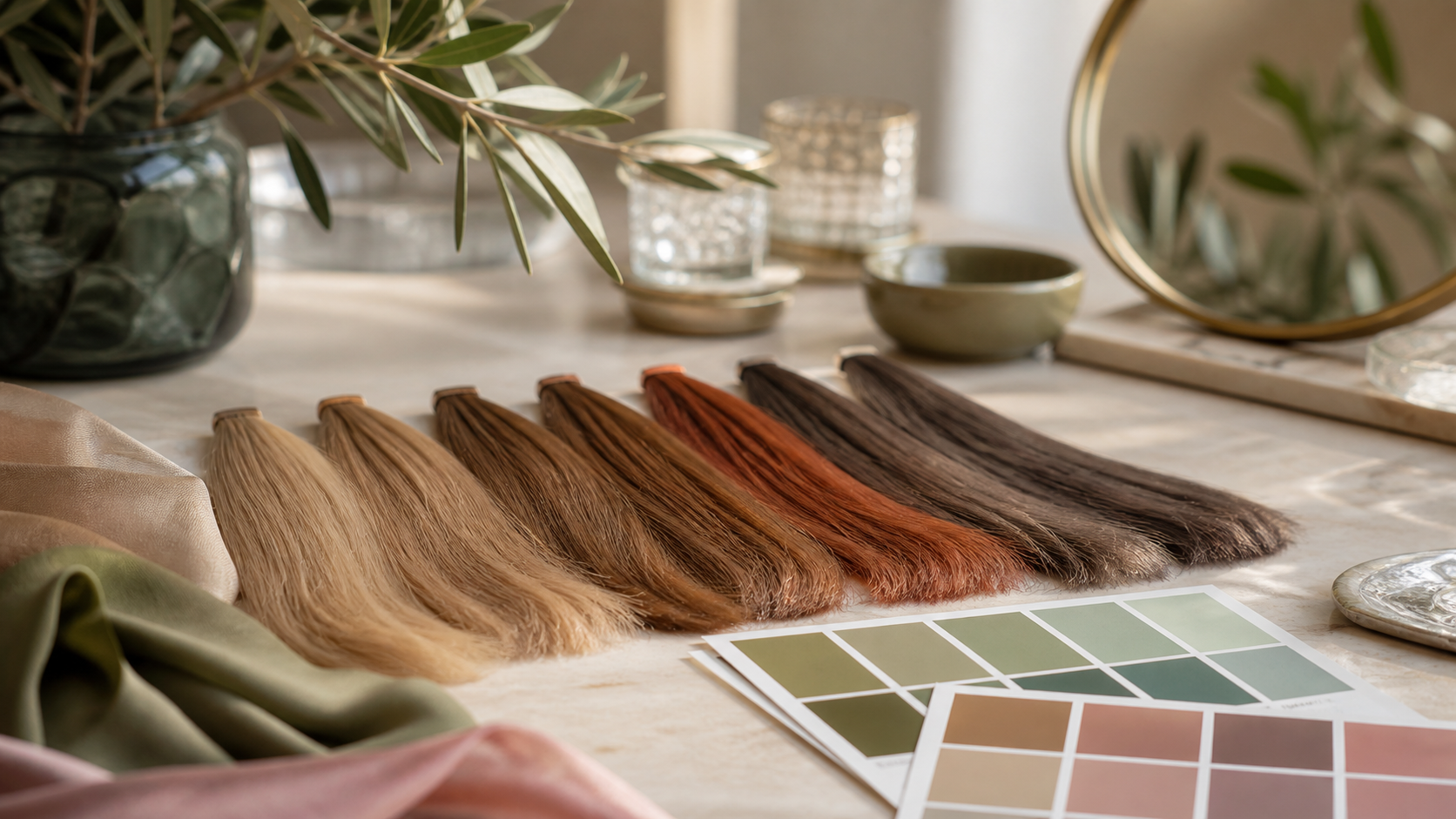
Pale olive skin is tricky because it can look warm in one light and cool in another. Hair colors that are too golden can turn sallow, while shades that are too ashy can look gray.
The best result usually sits near neutral: controlled warmth, muted depth, and no extreme yellow or blue cast.
Understand the olive undertone first
Olive skin often has a green or gray-green undertone beneath the surface. On pale skin, that undertone can be subtle, so people misread it as beige, cool, or yellow.
Look at how your face reacts to camel, icy pink, rust, charcoal, and sage. If both very warm and very cool colors feel slightly wrong, your hair color may need the same balanced approach.
Choose neutral browns before extreme shades
A quick online palette check at Color Analysis can help you decide whether your olive skin leans warm, cool, or neutral. Then start with neutral brown families: mushroom brown, soft chestnut, beige brunette, or muted cocoa.
These shades give structure without making the complexion look yellow or flat. They also grow out more gracefully than sharp black or high-lift blonde.
Use blonde carefully
Pale olive skin can wear blonde, but the blonde usually needs beige, sandy, or soft ash control. Strong yellow blonde can exaggerate sallowness.
If you want lighter hair, ask for dimension rather than one flat blonde. A neutral root and cooler ribbons often look more natural than all-over gold.
Copper can work when it is muted
Bright orange copper is risky on pale olive skin, but muted copper brown, cinnamon brown, or soft auburn can be beautiful when the rest of your palette supports warmth.
The key is to avoid neon warmth. Think polished, earthy, and slightly softened.
Check the result without heavy makeup
Pale olive skin can be corrected easily with blush or bronzer, but that hides whether the hair color is doing its job. Check the shade bare-faced in daylight.
A good shade should make the skin look clearer, not greener, flatter, or more shadowed.