Olive skin can be fair, medium, or deep. The useful question for hair color is whether the olive undertone behaves warmer, cooler, or closer to neutral.
Once you know that, the best shades become much easier to sort.
Warm olive skin can handle controlled gold
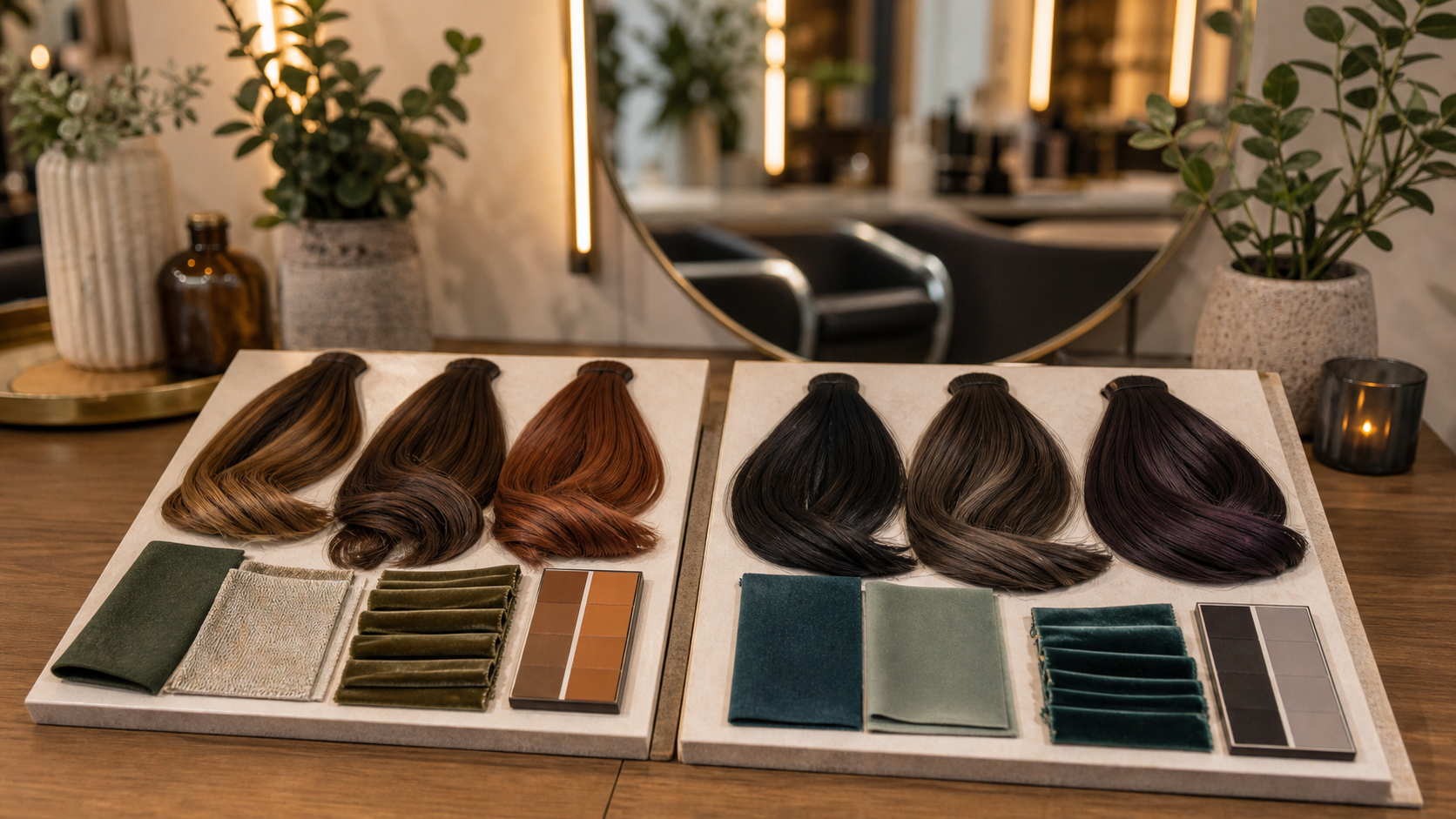
Warm olive skin often looks good with caramel brown, bronze brunette, soft copper brown, and honeyed highlights. These shades echo warmth without turning the face orange.
The word controlled matters. Too much yellow can make olive skin look dull, especially if the surface tone is muted.
Cool olive skin needs cleaner depth
If you cannot tell whether you are warm or cool olive, compare both directions with Color Analysis. Cool olive skin often prefers ash brown, espresso, cool chocolate, or violet brown rather than golden caramel.
These shades reduce the greenish cast that can appear when hair is too yellow. They also pair well with teal, plum, slate, and cool berry clothing.
Neutral olive skin is about balance
Neutral olive skin can borrow from both sides, but extremes are still risky. A beige brunette, soft chestnut, or muted dark blonde often looks more expensive than a very orange copper or icy ash.
If you like highlights, ask for a neutral gloss so the final shade does not swing too warm after a few washes.
Use contrast as a second filter
Olive skin with dark eyes and brows can often carry deeper brunette. Olive skin with lighter eyes or softer brows may need gentler depth and face-framing brightness.
When in doubt, keep depth close to your natural brows and adjust temperature first.
A simple comparison table
| Olive lean | Try | Avoid first |
|---|---|---|
| Warm olive | Caramel brown, bronze brunette | Flat ash blonde |
| Cool olive | Espresso, ash brown, violet brown | Strong yellow blonde |
| Neutral olive | Beige brown, soft chestnut | Extreme orange or blue-black |