Hair color analysis is the step between knowing your palette and actually choosing a dye. It translates the words warm, cool, soft, bright, light, and deep into real hair shades.
The goal is not to make every person stay natural. It is to make changes look intentional, balanced, and easier to wear.
Read your palette in three dimensions
Most hair mistakes happen when people only check warm versus cool. Temperature matters, but so do depth and chroma. A cool person may still look tired in very pale ash blonde if their features need depth.
Ask three questions: should the shade be warm or cool, light or deep, clear or muted? That gives you a much better shortlist than a generic inspiration photo.
Compare the shade to your face, not your outfit
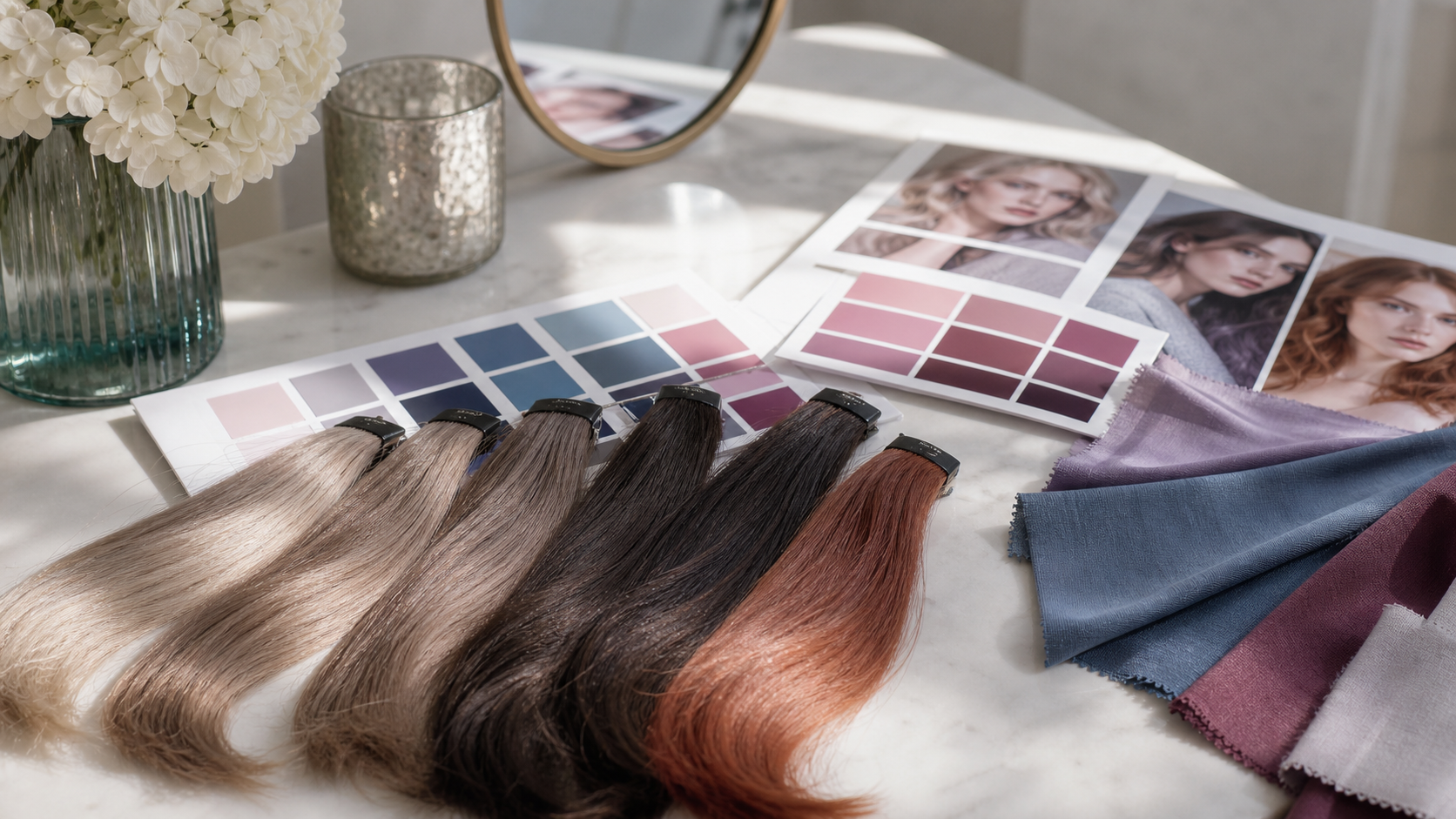
Before saving salon photos, identify your likely palette with Color Analysis. Then compare hair swatches against your face and eyes, not against a favorite sweater or seasonal trend board.
The right hair color usually makes the skin look smoother and the eyes more defined. The wrong one may still be pretty, but it asks the rest of your look to work harder.
Use your natural hair as a clue
Natural hair depth is often a useful anchor. If your natural color is soft medium brown, jumping to jet black can overpower you unless your palette supports high contrast.
If your natural shade is very dark and cool, pale warm blonde may look disconnected. A smaller move such as cool espresso, blue-black gloss, or deep berry brown can feel fresher without breaking harmony.
Separate color family from exact formula
A palette can tell you that mushroom brown, soft auburn, honey blonde, or espresso is a better direction. It cannot tell your colorist the exact formula without seeing your current hair history.
Use analysis for direction, then let the technical formula account for porosity, previous dye, gray coverage, and lift level.
Test with low-commitment changes first
Gloss, toner, demi-permanent color, face-framing pieces, or a wig try-on can show whether the direction feels right. This is especially useful when moving cooler, redder, or much darker.
Once the temperature and depth feel right, permanent color becomes less of a gamble.