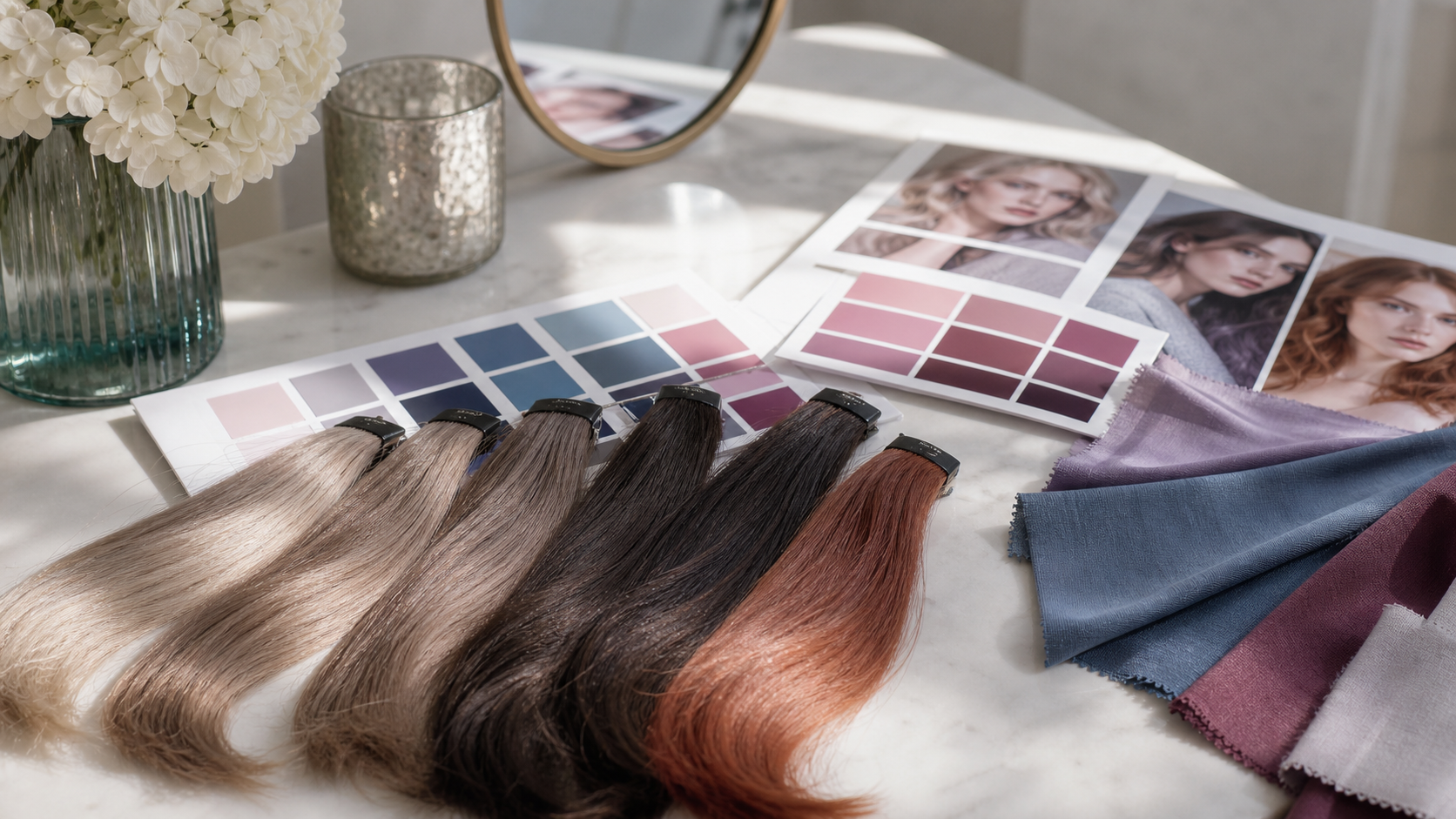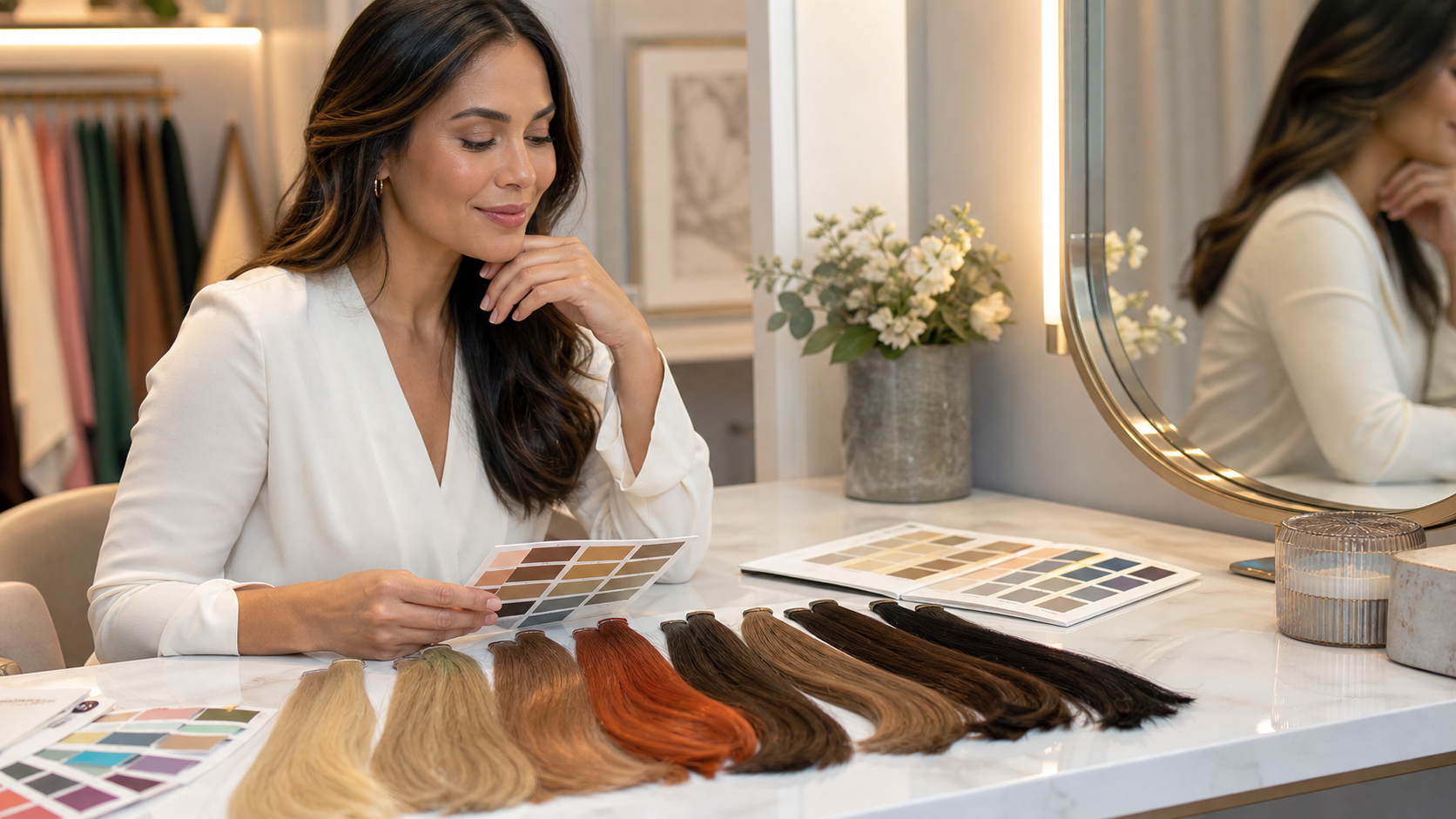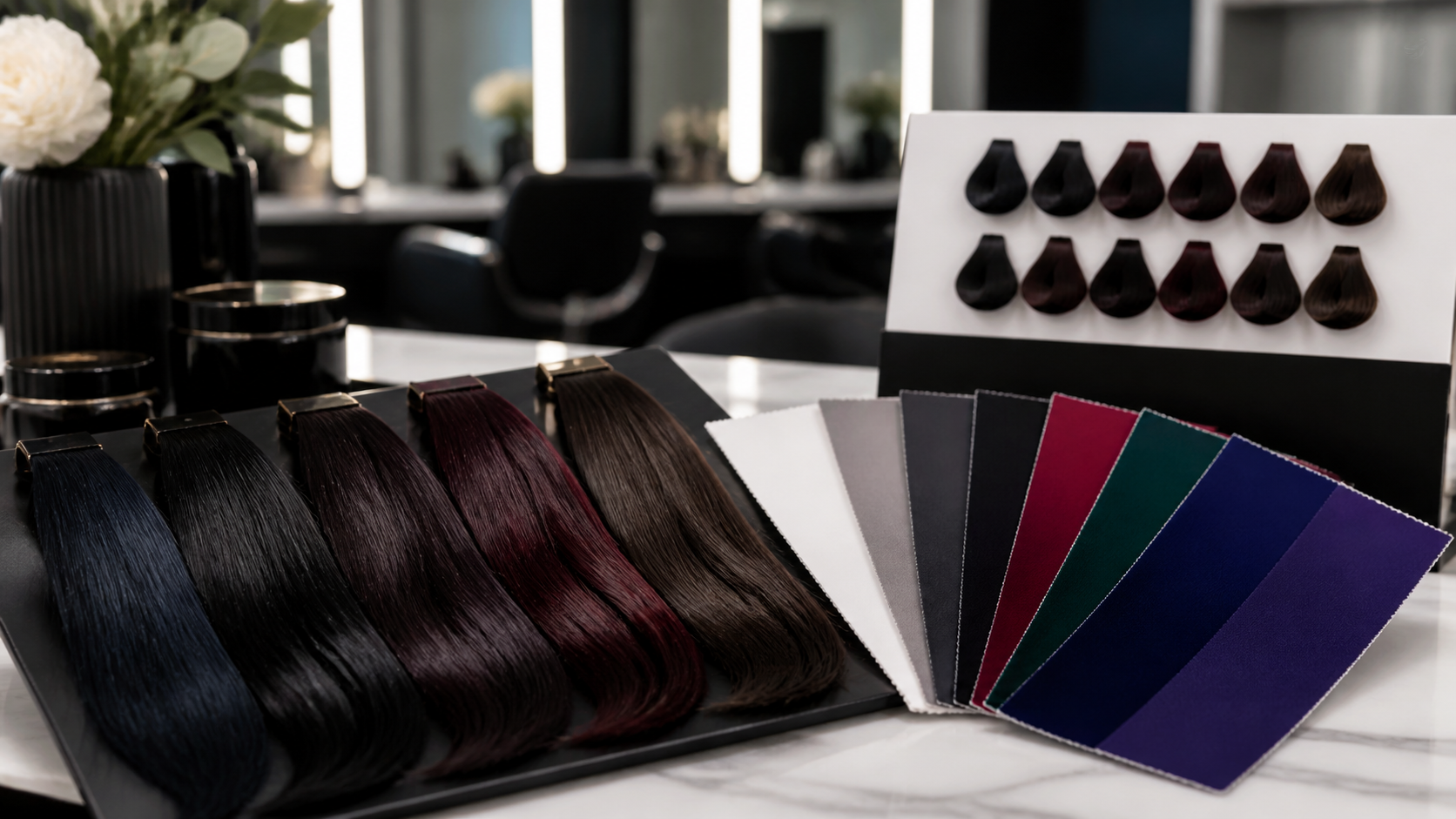
Deep Winter can carry hair colors that overwhelm softer palettes. The best shades are cool, deep, clear, and confident.
Still, high contrast does not mean any dark dye will work. Warm black-brown, orange highlights, or flat box color can dull the effect.
Choose clear depth
Espresso, blue-black, cool dark brown, and deep neutral black are classic Deep Winter directions. They sharpen the eyes and make jewel-tone clothing look intentional.
If your natural hair is already dark, a gloss may be more flattering than a full color change. Shine and coolness matter.
Dark cherry and burgundy need cool control
If you are unsure whether your contrast is truly Deep Winter, check it with Color Analysis before committing to very dark or very red hair.
Dark cherry, blackberry, and cool burgundy can be excellent when they remain deep. If they turn bright wine or warm red, they can fight the palette.
Avoid soft muddy browns
Deep Winter usually looks better in clean dark shades than in muted mouse brown. If brown is too dusty, the face can lose definition.
Choose cool chocolate, espresso, or black-brown with shine instead of flat ash mud.
Highlights should be strategic
Traditional golden highlights often look disconnected on Deep Winter. If you want dimension, use cool brunette ribbons, blue-black gloss, or very controlled face-framing contrast.
The result should still read deep from a few steps away.
Use clothing colors as a final test
Try the hair shade near black, white, emerald, cobalt, and berry. Deep Winter hair should make those colors look crisp rather than harsh.
If the hair only works with warm beige and bronze, it may be too warm for the palette.